
About
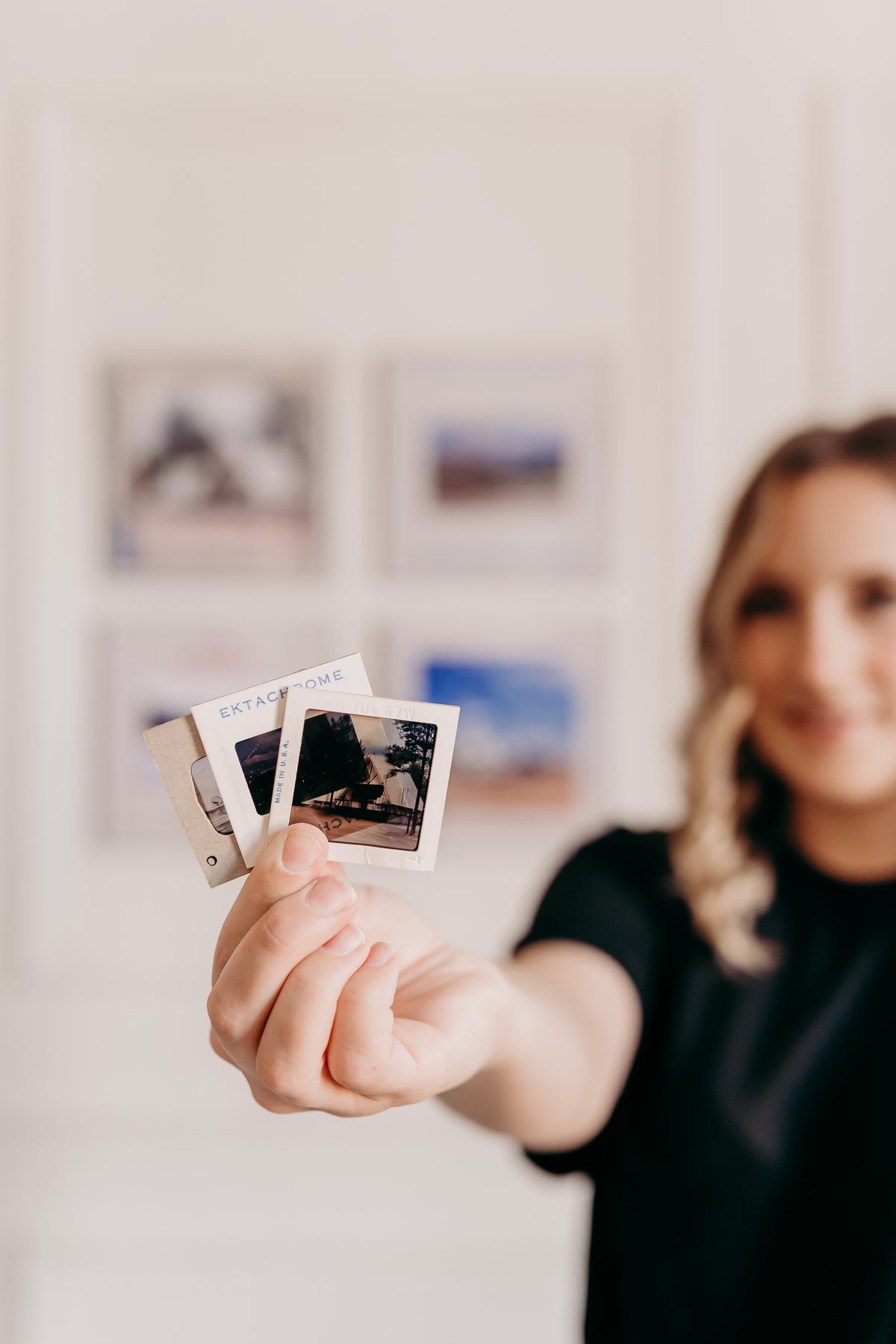
The thrill of the hunt has always had me. Antique stores with my mom as a kid, weekends thrifting with friends, rummaging through estate sales for something worth finding. In 2015 I found a small stack of vintage slides in a flea market stall. I held each one up to the light and saw tulip fields from the 1960s glowing back at me. I thought: wouldn't these be incredible blown up huge? Then I put them down and walked away. But the idea never left.
Years later in the basement of an estate sale I found a box of Kodak slides — a young man's days at the Naval Academy in Annapolis, the same place my now husband attended. It gave me a good excuse to buy them and I spent the next months experimenting. Through lots of trial and error over the years I settled on my process today. Today, Retrospect Studio Art has a collection of thousands of slides from all over the world . Each one rescued, catalogued, and the very best brought to life as a fine art print. Because these slides are literal windows into the past, and I refuse to let them be forgotten.
Why Slides ?
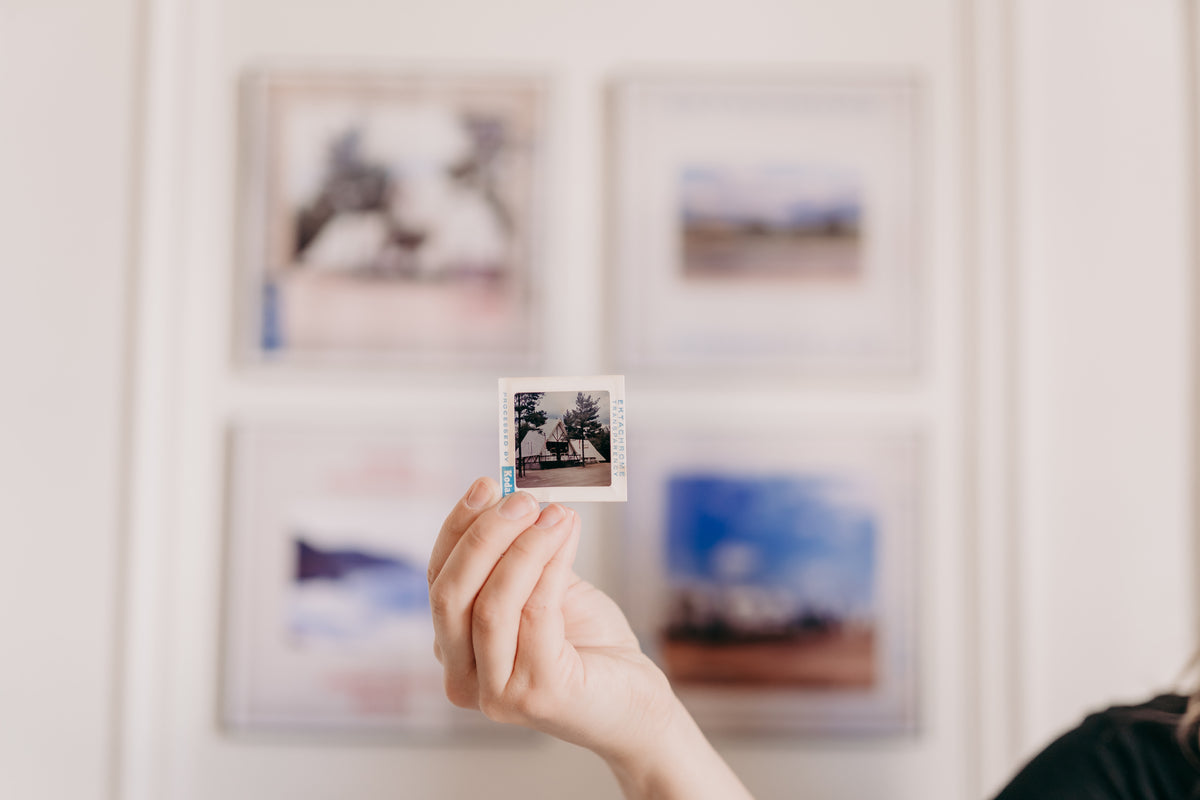
Because they are literal windows into the past.
Film was expensive. It took time to develop. Nobody wasted a frame on something that didn't matter to them. Every slide in my collection represents a deliberate choice - a landmark worth capturing, a trip worth documenting, a moment worth preserving. Because they exist only on transparency film, they can only be seen with light passing through them. Dark and mostly illegible until you hold one up or see it in a viewer, every slide has a moment of revelation. I love that anticipation, even now, even after thousands of them.
I love seeing how little has changed - how the same landmarks stand, how the same light falls, how the only clue that decades have passed is the cut of someone's coat or the shape of a car in the background. People weren't so different then. They took their families on vacation. They stood in front of famous things and took pictures. They tried to hold onto moments.
I hate the idea of these slides being thrown out or forgotten - too small to frame, too fragile to display, gathering dust in boxes no one opens anymore. So I bring them to life in a way that lets them be seen, finally, the way they deserve to be - large, luminous, and on your wall.
Every print at Retrospect Studio Art begins with a real slide. Real vintage slides have lived a life - and you may notice the occasional worn edge, subtle nick, or faint mark in the film. We think that's exactly as it should be. These small imperfections are the fingerprints of time. They are not flaws. They are part of the story.
Small slides. Big art.